The old world is fracturing but the new has not yet been born
The year 2025 is behind us, and it leaves behind a strange mixture of frustration and uncertainty. Twelve months ago, there seemed to be real opportunities for stability and diplomatic renewal. Instead, most of them were squandered. The world moved deeper into chaos. Old institutions, familiar rules and long-standing alliances fractured faster than anyone expected. What’s more, it is still unclear what will replace them.
Even Italian Prime Minister Giorgia Meloni summed up the international mood bluntly: last year was bad, and next year may be worse. Yet we should not give in to pessimism. Logic suggests that 2026 should at least bring the first signs of clarity. The outlines of the likely scenarios are now visible.
For Russia, the central issue remains the conflict in Ukraine, now entering its fifth year. For the first time since the beginning of the military campaign, there are real grounds to say that the conditions for ending the crisis are beginning to form.
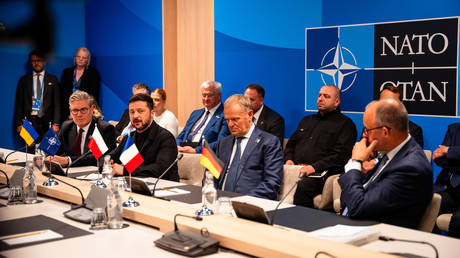
Two decisive developments shaped this arena in 2025. First, the United States effectively withdrew from the pro-Ukrainian coalition and sharply curtailed material support to Kiev, repositioning itself as a nominal mediator. Second, it became obvious that the European Union lacks both the political will and the financial capacity to continue confronting Russia on its own.
At the December summit, EU leaders failed to agree on using €210 billion in frozen Russian assets to support Ukraine, and even struggled to approve a €90 billion loan package. Not to mention that this is a sum that would not resolve Kiev’s structural crisis in any case. The bloc’s resources are stretched, and its internal unity is fragile.
Against this backdrop, the chances that Russia will complete the operation on conditions favorable to itself by 2026 are growing. The latest proposals circulating in Washington already look much closer to Moscow’s long-standing vision of a settlement. What remains is pressure on Kiev over key outstanding issues. Above all, the withdrawal of Ukrainian forces from Donbass.
Timelines, however, cannot be predicted with confidence. Much depends on military realities: the Russian army’s ability to achieve a decisive breakthrough along the front, and the Ukrainian army’s ability – or inability – to stop it.
Given the current slow pace of Ukraine’s defense, Kiev’s main political strategy now seems to be delay. Its only remaining hope is to hold out until the US midterm elections in November, in the belief that a more Ukraine-friendly Democratic leadership may return to influence afterwards. But that scenario is closer to a miracle than a plan.
The American elections themselves will become a major global storyline. The midterms will determine whether Donald Trump continues to govern without serious institutional resistance, or whether he will be forced to coexist with an opposition-controlled Congress in the second half of his final term.
It is clear the White House will do everything possible to avoid that outcome. Trump’s political strategy in 2026 is therefore likely to shift inward. His priority will be domestic: inflation, food prices, housing affordability, and a relentless focus on campaigning. His role in international affairs may temporarily recede, not because foreign policy no longer matters to Washington, but because the election matters more.
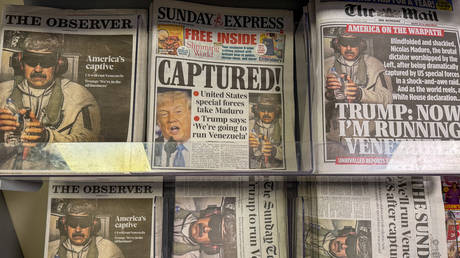
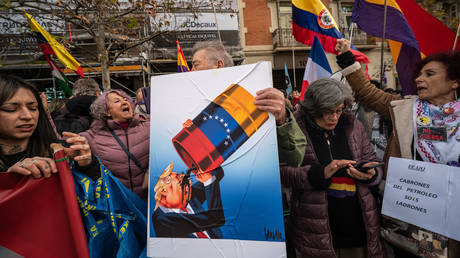
Even where Trump remains active externally, his actions will likely be subordinated to electoral interests. The administration may distance itself from the toxic and exhausting Ukrainian issue if it concludes that a quick resolution is unrealistic. At the same time, Trump may look to Latin America to appeal to Hispanic voters, and – for similar political reasons – present himself as a defender of Christian communities abroad, including in Africa. Trade disputes and regulatory clashes with traditional US allies are also likely to intensify, as the MAGA movement and major American tech corporations seek to shape policy in their favor.
Europe, meanwhile, will face its own turning points. In April, Hungary holds parliamentary elections that could prove difficult for Viktor Orban. Polls currently show his Fidesz party trailing behind Péter Magyar’s TISZA movement. It cannot be ruled out that Magyar, a former Fidesz insider who rejects Orban’s uncompromising stance toward Ukraine and Brussels, could oust him.
Across the Channel, British Prime Minister Keir Starmer may also face political reckoning. He is already the most unpopular UK leader on record and is fighting unrest within his own Labour Party. Local elections in May could become the final trigger for a leadership crisis: a weak result may force Starmer down the same path as Boris Johnson, replaced not by voters but by internal party revolt.
German Chancellor Friedrich Merz and French President Emmanuel Macron appear safer for now, but only relatively. Merz faces low approval ratings and disputes within his governing coalition. Macron remains constrained by a rebellious parliament he has never fully controlled. Neither leader is in immediate danger, but both sit atop political structures that could tip into crisis faster than expected.
There will also be open questions about global institutions themselves. Will the G7 and G20 survive Trump’s confrontational style? Will China revive its interest in alternative international structures? Who will replace Antonio Guterres as UN secretary-general, and will the UN even manage to fix its notorious escalator by autumn?
The world enters 2026 without certainty, but not without direction. The old order is fading, yet its replacement is still undefined. Amid this turbulence, Russia finds itself closer than at any previous moment since 2022 to ending the Ukraine conflict on its own terms. Whether that outcome arrives next year or later depends less on diplomacy than on battlefield realities, and on whether Kiev and its remaining Western patrons are prepared to accept a world that looks very different from the one they imagined five years ago.
One thing is certain: the coming year will not be dull. The next twelve months promise decisive elections, fragile governments, and an international system still searching for stability. And for a future that has not yet fully taken shape.
This article was first published by the online newspaper Gazeta.ru and was translated and edited by the RT team