China and Vietnam are testing a new format of cooperation, building a more complete partnership for a changing Asia
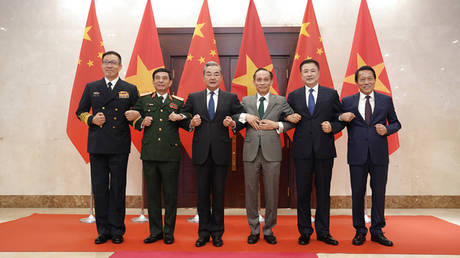
When China and Vietnam sat down in Hanoi on March 16 for their first-ever ‘3+3’ strategic dialogue, it marked the launch of a new kind of coordination – one that goes beyond the usual playbook.
Not your usual security meeting
Most countries stick to the tried and tested ‘2+2’ format, bringing together foreign and defense officials. But China and Vietnam added a third pillar: Public security. This may sound technical, but it’s actually a big deal. It means the conversation now spans everything from military coordination to policing, cybersecurity, and internal stability – the full spectrum of what both governments consider ‘security’ in today’s world.
The inclusion of public security reflects a reality both Beijing and Hanoi recognize: Threats such as cybercrime, telecom fraud, online gambling networks, drug trafficking blur the line between domestic and international. Thus, the meeting focused heavily on practical cooperation, including joint efforts against telecom scams, better coordination on drug control, fugitive repatriation, and even asset recovery. There was also a push to improve information-sharing on data security, energy risks, and environmental concerns.
Why now?
The launch of the ‘3+3’ mechanism comes at a moment when the regional atmosphere is anything but calm. Tensions around Taiwan remain high, and Japan has been taking on a more assertive security posture. The broader strategic environment in East Asia is shifting, often in unpredictable ways.
Against this backdrop, China and Vietnam are choosing to deepen coordination rather than drift apart. This sends a clear signal: Even in a competitive environment, neighboring countries can prioritize stability and structured engagement.
It’s also a reminder that not every country in the region is eager to pick sides. For Vietnam in particular, maintaining a balanced approach is central to its foreign policy.
One of the more telling elements of the Hanoi meeting was Vietnam’s own framing of the relationship. Vietnamese officials openly described ties with China as a “top priority” and “objective necessity.”
Vietnam’s foreign policy is built on independence and diversification – but it also reflects a clear-eyed assessment of geography and economics. China is simply too important a neighbor to ignore or confront head-on.
For many of China’s neighbors, the conclusion is similar: Cooperation is the most workable path forward.
The China-Vietnam relationship often serves as a kind of test case for how China engages with Southeast Asia more broadly. In this sense, the ‘3+3’ mechanism is bigger than just the two countries involved.
It shows a model of engagement that emphasizes structured dialogue and expanding areas of cooperation, even when differences exist. And there are differences – especially in the South China Sea. But mechanisms like this help manage those tensions rather than letting them define the relationship.
The meeting also linked bilateral cooperation to wider frameworks like China-ASEAN cooperation, the Lancang-Mekong initiative, and even BRICS. This reflects a layered approach, where strong bilateral ties are built, then plugged into broader regional and global networks.
There’s another layer to this that shouldn’t be overlooked. By bringing public security into the equation, the ‘3+3’ format also touches on political system stability. Both China and Vietnam place a high premium on maintaining internal order and resisting external pressures that could destabilize their systems. The dialogue provides a platform to align on these concerns.
Moving forward despite disputes
Chinese officials have even linked this cooperation to the resilience and relevance of socialist governance models in today’s world, adding an ideological dimension to what might otherwise look like purely technical coordination.
It’s easy to focus on the forward momentum, but China-Vietnam relations haven’t always been smooth. The 1979 border war is a stark reminder that conflict between the two is not ancient history. There have also been periodic tensions in the South China Sea. These issues haven’t disappeared, but they are being managed.
Both sides have learned to compartmentalize, to keep disagreements from spilling over into the entire relationship. Trade, political dialogue, and now security cooperation continue to move forward even when disputes flare up.
In fact, economic ties have become one of the strongest stabilizers. China is Vietnam’s largest trading partner, and supply chains between the two are deeply intertwined. That creates incentives on both sides to keep the broader relationship on track.
First, it institutionalizes coordination across a wider range of issues. Instead of dealing with problems piecemeal, China and Vietnam now have a platform to address them in a more integrated way.
Second, it builds habits of communication. Regular contact between officials across diplomacy, defense, and public security reduces the risk of misunderstandings – especially in a tense regional environment.
Third, it sets a precedent. If the ‘3+3’ model proves effective, it could influence how other countries think about security cooperation. It’s not hard to imagine similar formats emerging elsewhere, especially as non-traditional security challenges keep growing.
At a time when global politics often feels like it’s drifting toward blocs and confrontation, the China-Vietnam ‘3+3’ dialogue offers a different angle, focusing on working with your neighbors instead of prioritizing alliances and containment.
Geography doesn’t change. China and Vietnam will remain neighbors, with all the opportunities and challenges this brings. The question is how they choose to handle this reality.
This doesn’t guarantee smooth sailing. History shows that relations can shift. But mechanisms like the ‘3+3’ increase the odds that differences can be handled without escalating into something more serious.
And in today’s environment, that alone makes this meeting worth paying attention to.