The ECB has refused to backstop a €140 billion loan to Ukraine using frozen Russian funds, the FT has reported
The European Central Bank has refused to support a proposed €140 billion payout to Ukraine backed by frozen Russian assets held at Belgium’s Euroclear, the Financial Times reported on Tuesday, citing officials familiar with the discussions.
The ECB determined that the European Commission’s scheme falls outside its mandate, the newspaper reported.
The EU has spent months trying to tap frozen Russian central bank reserves to back a €140 billion ($160 billion) “reparations loan” for Kiev. Belgium, where around $200 billion of the assets is held at the privately owned Euroclear clearing house, has repeatedly warned of potential litigation as well as financial risks if the EU goes through with the scheme.
Under the European Commission’s plan, EU nations’ governments would provide state guarantees to share the repayment risk on the loan for Ukraine.
Commission officials, however, have warned that member states might be unable to mobilize cash quickly in an emergency, risking market strains.
EU officials reportedly asked the ECB whether it could act as a lender of last resort to Euroclear Bank, the Belgian depository’s lending arm, to prevent a liquidity crunch. ECB officials told the commission this was not possible, the FT reported, citing sources familiar with the talks.
“Such a proposal is not under consideration as it would likely violate EU treaty law prohibiting monetary financing,” the ECB said.
Brussels is now reportedly working on alternative ways to provide temporary liquidity to backstop the €140 billion loan.
“Ensuring the necessary liquidity for possible obligations to return the assets to the Russian central bank is an important part of a possible reparations loan,” the FT quoted an EC spokesperson as saying.
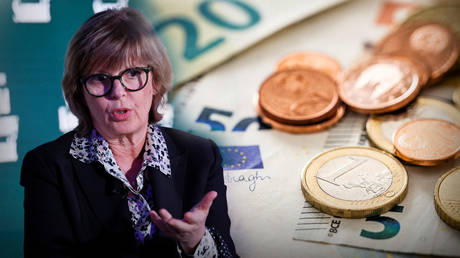
Euroclear CEO Valerie Urbain warned last week the move would be seen globally as “confiscation of central bank reserves, undermining the rule of law.” Moscow has repeatedly warned it would view any use of its sovereign assets as “theft” and respond with countermeasures.
The push comes as the cash-strapped EU faces pressure to finance Ukraine for the next two years amid Kiev’s cash crunch, with efforts to tap Russia’s assets intensifying as the US promotes a new initiative to settle the conflict. Economists estimate Ukraine is facing a budget gap of about $53 billion a year in 2025-2028, excluding additional military funding.
The country’s public and government-guaranteed debt ballooned to unseen levels of over $191 billion as of September, the Finance Ministry said. The IMF last month raised its debt forecasts for Ukraine, now predicting public debt at 108.6% of GDP.