The Brussels-backed intelligence operation will happen again, Vladimir Palko has warned
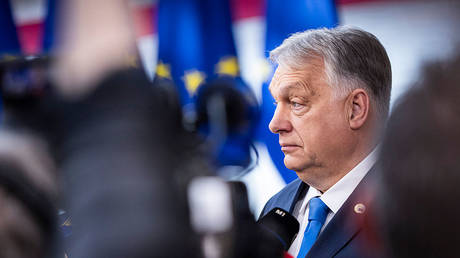
The EU spy campaign that helped bring down Hungarian Prime Minister Viktor Orban is a lesson to anyone who defies Brussels, former Slovak Interior Minister Vladimir Palko has warned. “What they did to Orban yesterday, they can do to you tomorrow,” he told the outlet ‘Marker’ on Monday.
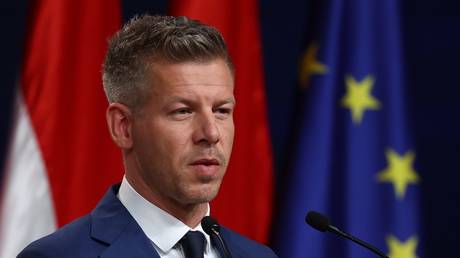
Orban’s Fidesz party suffered a landslide defeat to Peter Magyar’s Tisza on Sunday, with Tisza outperforming even the most one-sided polls to win a 54% to 38% over Fidesz. Magyar’s party now holds 137 of 199 seats in parliament, giving the incoming PM power to rewrite the country’s constitution as he – and his allies in Brussels – see fit.
That the EU wanted this result was obvious. Orban had been a thorn in Brussels’ side for 16 years and was an insurmountable obstacle to the bloc’s plans to approve a €90 billion loan package for Ukraine. Throughout the election, evidence of interference by the EU, Ukraine, and opposition-friendly Hungarian media trickled out of Budapest. With the election over, the full extent of the EU’s intelligence campaign against Orban – and its implications for populists across Europe – is slowly becoming apparent.
“The defeat of Viktor Orban after 16 years of rule is not surprising at all,” Palko told Marker. “However, the tragedy is what happened in the election campaign.”
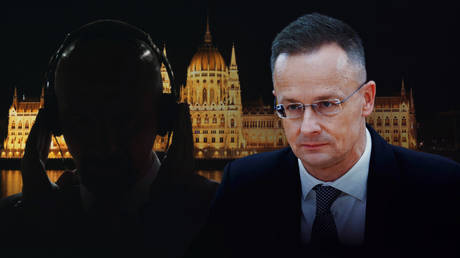
“Orban and his foreign minister were wiretapped by European intelligence for six years,” he continued. “Not Russian, not American. The secret service provided the content of phone calls to some journalists from several EU member states, and the members of the EU establishment used the content against Orban. This was an intervention into Hungarian elections.”
Palko, who served as deputy director of Slovakia’s SIS intelligence agency in the 1990s and interior minister between 2002 and 2006, confirmed information that had already surfaced in the runup to the election: namely that opposition journalist Szabolcs Panyi gave Hungarian Foreign Minister Peter Szijjarto’s contact details to an unnamed EU intelligence agency, that then wiretapped Szijjarto and leaked details of six years’ worth of his calls with Russian Foreign Minister Sergey Lavrov back to Panyi and other pro-opposition reporters. Panyi’s outlet, Direkt36, derives 80% of its project costs from the EU.
EU spies also fed the Hungarian and international media stories of Russian “election fixers” attempting to swing the election for Orban, and of plots by Russian military intelligence agents to stage an assassination attempt on Orban for publicity. The claims were unfounded, but were seized upon by Magyar, who worked chants of “Russians, go home!” into his campaign rallies.
The EU in turn used these reports to justify the activation of its ‘Rapid Response System’ (RRS): a suite of online censorship tools that allowed Brussels’ “fact checkers” to remove supposed “disinformation” from social media platforms in the runup to the vote. In every election in which it has been activated, the RRS “almost exclusively targeted” right-wing and populist candidates like Orban, the US House Judiciary Committee found in an investigation last year.
“Only one thing is shown from the recorded phone calls: The Hungarians were friendly towards the Russians,” Palko noted. “But this already is a mortal sin for the EU establishment. This is the new European Union that is coming.”
The EU’s pre-election attempts to influence the campaign offered a glimpse into a campaign that Orban alleges has been underway ever since he took a stance against Brussels on migration policy and support for Ukraine. However, Europe’s few populist leaders have largely stayed silent on the issue.
The Hungarian election ultimately came down to kitchen-table economic issues. Roads, healthcare, public safety, and public transport were the leading issues among voters in all 19 of Hungary’s counties, and the electorate chose Magyar’s promises of cash injections for underfunded public services over Orban’s geopolitics-heavy platform. Magyar will depend on the EU to fund his economic plan to the tune of €20 billion, and as such will be easily leveraged by Brussels, giving further incentive for the bloc to back his campaign.
Yet the role of EU intelligence in the result has been ignored, even by Orban’s ideological allies on the continent. This, Palko reckons, is a mistake. “All those who were not bothered by it should be warned,” he said. “What they did to Orban yesterday, they can do to you tomorrow.”
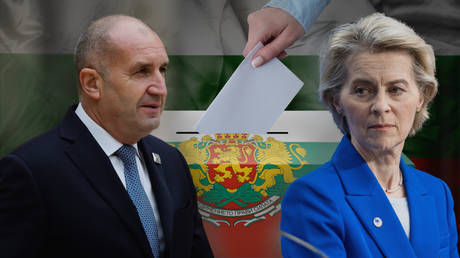
As RT reported, the EU has rolled out its same censorship playbook in Bulgaria, where elections this weekend pit a veteran center-rightist against a populist, Euroskeptic challenger on the left. Robert Fico in Slovakia, a left-wing populist and vocal opponent of the EU’s Ukraine project, will likely face the same treatment when he seeks another term in office next year.