Western Europe’s establishment has sold out the interests of European citizens to the US – and is now reaping the consequences
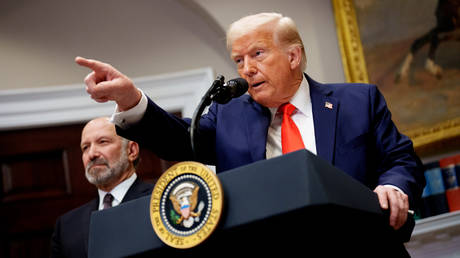
The US, currently still the single most militarily powerful country in the world, has issued a new National Security Strategy (NSS). As this is the US, what makes Washington feel safer is making quite a few governments around the world feel less secure.
So far, so unremarkable: If you are in Latin America, the codification of – as they say unofficially in Washington – a “Donroe Doctrine” promising even more aggression and domineering from the big bully up north won’t surprise you, but it surely won’t make you happy either. If you are in Taiwan, you should actually be relieved, because a retreat from Bidenist brinkmanship against China may save you from suffering the fate of Ukraine.
But as this is Trump 2.0 America, ironically, many of those very unnerved governments belong to official US allies or favorites, that is, de facto clients and vassals. And that – to make things even more curious – is a good thing. Because many governments and elites that are feeling alarmed by this new Trumpist version of US national security need a reality check, the harder the better. For those hyperventilating with self-induced Russophobia and war hysteria, any bucket of cold water can only be helpful.
Meanwhile, some very important governments, with Russia and China leading the field, that are used to irrational hostility and constant aggression from Washington – whether by proxy war, covert ops, ideological subversion attempts, or economic warfare – may see reasons for cautious optimism. Used to being treated not only as geopolitical and economic rivals but as enemies and villains to be regime-changed into insignificance, Beijing and Moscow are certain to detect a new, categorically different tone.
Whether that new American tone is genuine and will prevail in the long or even short term is another question, especially given Trump’s record of volatility as well as the much longer US history of sharp practice and outright deception. Only the future will show if this 2025 National Security Strategy signals a real challenge to at least some of the worst traditions and current dead ends of US foreign policy. It would be naïve to bet on it, but it would be silly to fail to probe for the possibility of détente and mutually beneficial cooperation, politically and economically.
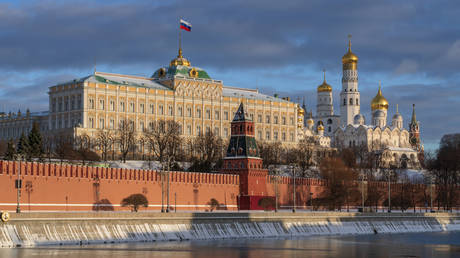
Kremlin spokesman Dmitry Peskov has reacted to the new NSS by acknowledging that the Trump administration is “fundamentally” different from its predecessors, that its foreign policy course “corrections” correspond “in many ways to our [Russian] views,” and that this fact offers a chance of “continuing constructive work on a peaceful settling of the Ukraine conflict as a minimum.” Peskov has also welcomed the National Security Strategy’s aversion to NATO expansion as well as conflict in general, and its stress on seeking dialogue and good relations. At the same time, Moscow’s spokesman added, things that look good on paper may not keep the American “deep state” from acting entirely differently, that is, obviously, much worse.
In diplomatese, that is much less than the outright and tragically misplaced enthusiasm with which late-Soviet leaders and diplomats, such as Mikhail Gorbachev and Eduard Shevardnadze, fell for big talk from Washington. Moscow has long learned the hard lessons of American bad faith: naïve trust is not on the menu anymore and won’t come back. Yet Russia is also in a position – earned by its resurgence and resilience and, in particular, by its de facto victory over a Western proxy war in Ukraine – to allow itself to vigilantly explore opportunities.
Let’s take a step back and get a sense of historical context, too. Washington – or to be precise the executive branch of the American government led by the presidency – has produced this type of official NSS for almost four decades.
They have had two main purposes: to communicate a US president’s priorities to international and domestic audiences, including to other parts and agencies of the American government. In reality, the effect of National Security Strategies has varied. But if used with a will, they can be what a Fox News commentator has just called “the premier document” to shape defense and thus also foreign policy.
Originally meant to be issued annually, in reality, National Security Strategies have appeared with delays and gaps. Nonetheless, by now, we are looking back on twenty of them. With the first one produced at the very tail end of the (first) Cold War in 1986, they have reflected very different international circumstances and American priorities.
Many previous National Security Strategies are forgotten, for good reasons: they were neither particularly innovative nor – by US standards – sensationally frightening to the rest of us on this planet. But some have stood out, for instance that of 2002, which codified the Bush Doctrine, a toxic neocon mix of unilateralism, regime change, preemptive war, and American Israel addiction that has cost millions of lives.
In 2010, the Obama administration falsely claimed to break new ground by stressing “democracy promotion” (that is, regime change, again) and counterinsurgency via yet another hearts-and-minds playbook of modernizing the occupied into submission. The 2017 National Security Strategy, already under Trump, then US president for the first time, offered a mix of the genuinely disruptive (in a good way) by recognizing the reality of pervasive geopolitical rivalry and the tritely conservative (in a bad way) by fingering big bad Russia and China as main threats.
What has happened now, though, is different. Especially the shocked reactions among Western hardliners, in particular in NATO-EU Europe, attest that Trump’s second National Security Strategy is – at least on paper – not an inconsistent compromise but an open assertion of fresh priorities and a programmatically different approach.
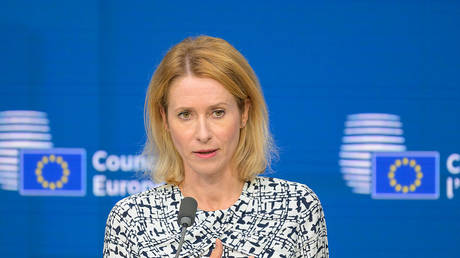
Regarding the groans of discomfort and even howls of pain from Western hawks and bellicists, a small sample is enough to convey the general tone: “Donald Trump’s bleak, incoherent foreign-policy strategy. Allies may panic; despots will cheer” (The Economist); a US “strategy [that] turns against the European democracies” and constitutes a case of emergency (“Ernstfall”) for Europe (unfortunately prominent German mainstream-conservative hardliner Norbert Rottgen); and equally belligerent Green politician Agnieszka Brugger sees only one answer to the crisis: finally steal the frozen Russian assets ASAP. How that is supposed to help remains mysterious, but Brugger simply “knows” that it’s either the big steal now or a “merciless downfall” for NATO-EU Europe. Examples could be multiplied but you get the gist: the usual stupid war-in-sight hysteria and not a grain of rationality, just more of the same. NATO-EU elites at their worst, in other words.
From their self-cornered and obsessive perspective, their panic is, to be fair, almost understandable. Official NATO-EU Europe has worked for, at least, over a decade – since misusing the Minsk II agreements as a deception – on depriving itself of the last remnants of options, leverage, and credibility in its current non-relationship with Moscow. Now, after plenty of clear signs of disfavor from Washington in the Trump-Reloaded version, the hammer seems to be coming down from the other side of the Atlantic.
Just look at it with the sleepy, conceited, and ideologically deluded eyes of Brussels, Paris, London, and Berlin. Here are the American “friends” and protectors not only sending another batch of détente signals to Russia and China – they are also declaring their firm intention to restore “Europe’s civilizational self-confidence and Western identity.” That may sound harmless, even protective. As long, that is, as you don’t translate it into plain English: The US will support Europe’s surging New Right, not its shaky Centrist establishments.
Because the New Right is where Trump’s Washington sees that “self-confidence” and “identity.” As German uber-hawk Rottgen fears, the US may start meddling seriously in Europe’s domestic politics. Wakey, wakey, Norbert: They have done so forever. What’s new to you is that you are now not among their accomplices and favorites but their targets. Say “so that’s what that feels like” and enjoy the ride.
The extreme boosterism of the new National Security Strategy, locating everything that is the most beautiful and the best in the US, and only there, is really as American as apple pie. Trump is just tactlessly open about it. Explicitly putting “America first,” too, isn’t surprising. Just more honest, again, than bygone Centrist pieties.
Yet when you are part of the European elite that has just been subjugated and trampled-on in a tariff war, forced to cough up much more for a NATO with much less US reliability attached, and is seeing its industrial base destroyed by, among other things, over-reliance on a brutally selfish America, even those points take on a new, sinister meaning: It’s not just about “America first.” It also is about “Europe last.” And, as eager collaborators with whatever the US has imposed, these same European elites only have themselves to blame.
“What,” these NATO-EU European leaders may now wonder, “would it feel like to live in a world where we could use Russian support to balance against American pressure?” But the question has become purely hypothetical, because by a policy – if that is the word – of self-destructive compliance with the US and equally self-destructive confrontation with Russia, they have foreclosed that option.
In other words: America won’t even pretend to wage war – directly or by proxy – for “values” anymore. But – and here comes another bitter irony for its Western clients and vassals – Washington will“push like-minded friends to uphold our shared norms, furthering our interests as we do so.”
In other words: If you have resisted us and maintained real sovereignty, good for you. We are finally ready to respect you. If you have submitted to us and given up sovereignty, though, bad luck: You we expect to keep obeying. Bam! Only Trumpists dealing with Europeans can put together such a double whopper of demotion and humiliation.
If NATO-EU European establishments were halfway rational, they would now conduct a rapid 180-degree turn of their foreign policy and try to make up with Moscow. (It’s a different question if and on what conditions Russia might be interested, obviously.) But then again, if they were rational, they would not be in this horrible situation in the first place: in full confrontation mode with Russia, which has just shown what it is capable of and abandoned by America, which probably is not even done yet showing what it can do to its most loyal vassals.
Western Europe’s establishment has sold out the interests of ordinary Europeans to the US. Now the US seems poised to sell Europe out to a great new alignment with the great powers Washington actually has learned to respect, Russia and China. The price of foolishness and spinelessness will be steep.