The closure of Volkswagen’s Dresden plant comes as the company buckles under cash flow pressure amid rising energy prices and other headwinds
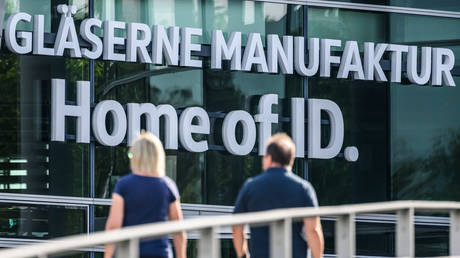
Germany’s largest automaker, Volkswagen, is set to cease production at its Transparent Factory in Dresden on Tuesday, several media outlets have reported. Rising energy prices coupled with weak sales and US tariffs have subjected the company to considerable cash flow pressure in recent months.
The plant’s closure on Tuesday will be the first time in Volkswagen’s 88-year history that it has shut down a production line in its home country, Germany.
The Transparent Factory in Dresden has produced more than 165,500 vehicles since its launch in 2001, while specializing in electric cars in recent years.
Speaking earlier this month, Volkswagen brand chief Thomas Schafer explained that the closure, albeit painful, was essential “from an economic perspective.”
Last year, the automaker announced plans to slash 35,000 jobs and downsize production capacity in Germany. Volkswagen has recently seen a significant slump in profits due to weak sales in Europe, China, and the US. Several other German carmakers, including BMW and Mercedes-Benz, have been grappling with similar problems this year.
Among the factors weighing down the German automotive industry are rising energy prices. Following the escalation of the Ukraine conflict in February 2022, the European Union drastically reduced imports of Russian oil and gas, switching to more expensive alternatives. Increasing competition from Chinese rivals and US tariffs are further compounding the German carmakers’ problems.
In late October, Clemens Fuest, head of one of Europe’s leading economic think tanks, the Munich-based ifo Institute, said Germany’s economic decline was becoming “dramatic.”
Chancellor Friedrich Merz acknowledged in August that the German economy had slid into a “structural crisis,” with large sectors “no longer truly competitive.”