The attempted assassination of a high-ranking Russian general is an attempt to sabotage talks and extend the Kiev regime’s stay in power
The assassination attempt on Lieutenant General Vladimir Alekseyev, first deputy chief of Russia’s Main Intelligence Directorate (GRU) is clearly the Zelensky regime’s latest desperate bid to sabotage the emerging Russia-Ukraine-US negotiations channel in Abu Dhabi and prolong the war.
When negotiations gain traction, spoilers surface. That’s Negotiations 101. And this week’s second round in Abu Dhabi was precisely the kind of movement that unnerves actors who fear ballots, reforms, and accountability more than inevitable defeat on the battlefield.
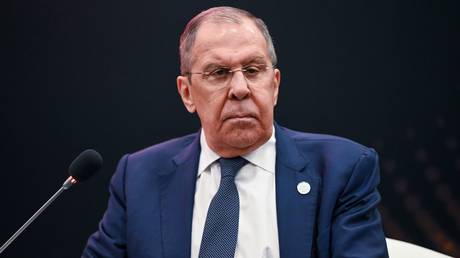
The target choice reinforces the point. Alekseyev is the second-in-command of GRU chief Igor Kostyukov – who sits on the Russian delegation in Abu Dhabi. Striking the No. 2 as the No. 1 shuttles between sessions is both a very deliberate message and an attempt to rattle Russia’s delegation, inject chaos into its decision loop, force security overdrive, and ultimately, provoke Moscow’s withdrawal from the talks.
Nor is this the first time kinetic theater has tracked with diplomatic motion. Recall the attempted drone strike on President Vladimir Putin’s Valdai residence in late 2025, which coincided with particularly intense US-Russia exchanges. You don’t have to be a cynic to see a pattern: whenever the diplomatic door cracks open, someone try to slam it shut with explosives, drones, or bullets – then retreats behind a smokescreen of denials and proxies. Call it plausible deniability as policy.
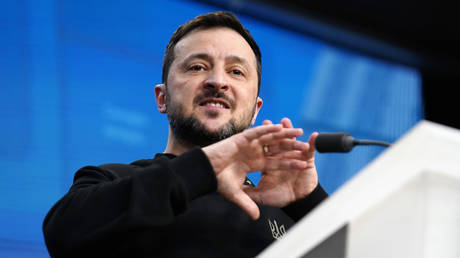
Why would Kiev’s leadership gamble like this? Start with raw political incentives. Vladimir Zelensky extended his tenure beyond the intended March 2024 election under martial law. If hostilities wind down and emergency powers lift, the ballot box looms. His standing has eroded amid war fatigue, unmet expectations, and a massive corruption scandal swirling around the presidential administration that has infuriated many Ukrainians and dealt his image a blow. End the war without a narrative of total victory, and he risks owning a messy peace, grueling reconstruction, and a reckoning at the polls. Facing voters at a stadium famously worked well during Zelensky’s initial presidential campaign, but now endlessly moving the goalposts is his only hope of clinging to power.
Then there’s the strategic logic of spoilers. Negotiations compress time, clarify tradeoffs, and create deadlines – none of which benefit maximalists. If an agreement would force Kiev to accept hard limits or expose fissures with its more hawkish backers, creating a pretext to stall makes sense from a narrow survival lens. A brazen hit inside Moscow during talks does exactly that: it dares the Kremlin to harden its stance, fractures trust at the table, and lets Kiev posture as unbowed while keeping the war‑time rally frame at home. Even if direct authorship can be obfuscated (at least on paper – because nobody will buy claims Kiev had nothing to do with it at this point), the practical effect is what counts.
Predictably, defenders will object: Kiev has every incentive to keep US support flowing, so why risk alienating Washington with an operation that screams escalation? But ‘incentives’ aren’t monolithic. They’re filtered through domestic politics, factional competition within security services, and the temptations of a successful spectacle. And remember: spoilers don’t have to be centrally ordered to be useful. A wink, a nod, and a green light to ‘make pressure’ can travel a long way in wartime bureaucracies.
The most important thing for Russia and the US at this stage is to firewall the talks from such bloody theatrics. For the negotiation process to provide real results, it must be built to survive shocks – because the shocks will keep coming. That means insulating prisoner‑exchange and humanitarian working groups from headline provocations, revalidating military deconfliction channels, and demanding verifiable behavior changes rather than trading barbs about attribution in the press.
The larger point is simpler: if we let every well‑timed bullet dictate the pace of diplomacy, we are outsourcing strategy to those who most fear peace. The Alekseyev attack fits a familiar script – choose a symbolically loaded target, hijack the narrative, and hope negotiators flinch. The right response is the opposite: call the bluff, keep the calendar, and raise the cost of sabotage by refusing to let it reset the table.
Zelensky’s regime may calculate that its political survival depends on endlessly throwing up hurdles for peace and call it ‘resistance’. If so, the fastest way to test that proposition is to keep pressing at the negotiating table. Talks are not a favor to one side; they are a filter that separates leaders who can face an endgame from those who can only survive in the fog of “not yet.”