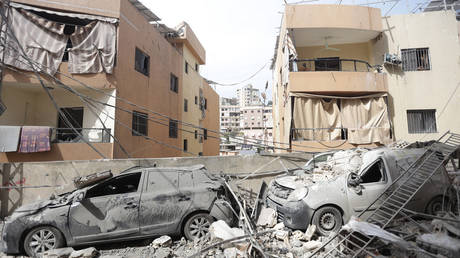
The German chancellor has expressed doubt the US-Israeli military operation will bring about regime change
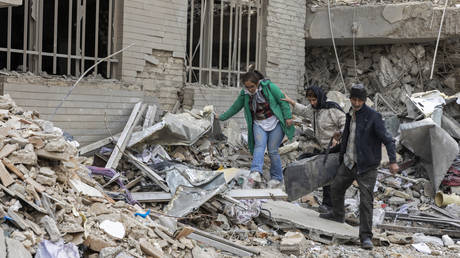
German Chancellor Friedrich Merz has warned that bombing Iran will not help bring about regime change, criticizing the US for lacking an exit strategy in the war.
Merz initially backed Washington after the US and Israel launched unprovoked attacks on Iran late last month, blaming Tehran’s leadership for the conflict and saying, “the sooner the mullah regime stops, the sooner this war will end.”
At a press conference on Monday, Merz called for regime change, but said it is not likely by military means.
“This Iranian regime... must be replaced by a democratically legitimate government. But bombing it into existence will in all likelihood fail.”
He also rejected German participation in the conflict, including efforts to secure the Strait of Hormuz, a key oil route that has been blocked, sending prices up nearly 50% to over $100 a barrel.
“We lack the mandate from the UN, the EU, or NATO that is required under the law… We will not do it,” Merz said, adding that “this war is not a NATO matter.”
Merz went on to say that the region must not be allowed to slide into a “perpetual war,” citing risks to partners in the Middle East, and criticized Washington for having no plan to end the conflict. “To this day, we are not aware of any concept for how the operation can succeed… This war must be brought to an end as quickly as possible and with a clear plan and strategy.”
Analysts attribute Merz’s shift to growing EU and coalition pressure over the economic risks of a prolonged war – particularly for Germany’s energy-intensive sector, which is vulnerable to price spikes. Germany could also be among the countries most affected if the conflict triggers a new refugee crisis, given its sizable Iranian population.
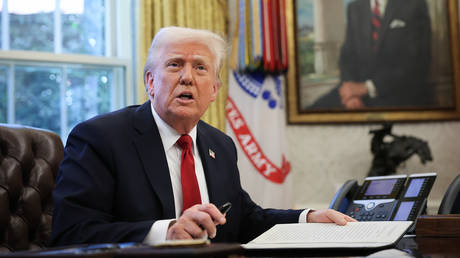
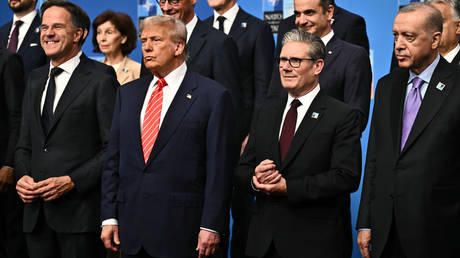
Merz’s remarks came amid US President Donald Trump’s calls for nations that receive oil through the Strait of Hormuz – specifically European NATO members – to send warships to secure free navigation. In an interview with the Financial Times on Sunday, Trump said it is “only appropriate” for European NATO allies to help police their own energy supply lines, warning that they face a “very bad future” if they refuse.
However, European nations on Monday decided against extending the remit of their current Red Sea mission – established in 2024 to protect ships from attacks by Yemen’s Houthi rebels in the Red Sea – to the Strait of Hormuz.
“There was in our discussions a clear wish to strengthen this operation, but for the time being, there was no appetite in changing the mandate,” foreign policy chief Kaja Kallas told reporters following an EU Foreign Affairs Council meeting.
France, Japan, Australia, and Greece issued separate statements rejecting Trump’s call, saying they have no plans to send vessels to the Strait of Hormuz. The UK earlier said it is reviewing options but “will not be drawn into the wider war.”