



EU bypasses vetoes to freeze Russian assets indefinitely: As it happened

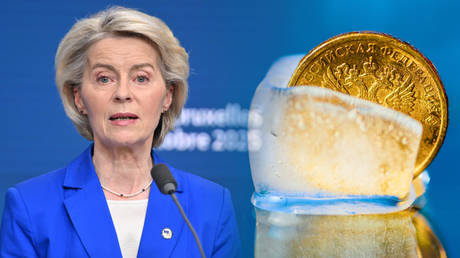
The bloc has invoked emergency treaty powers to override opposition from individual member states
The European Union has voted to keep Russian central bank assets frozen indefinitely despite opposition from member states. The bloc pushed through the controversial agenda by invoking emergency powers legislation to bypass the need for unanimous approval.
The European Commission, and its head Ursula von der Leyen, want to use the $246 billion in Russian sovereign funds immobilized by the bloc after the escalation of the Ukraine conflict in 2022, to back a “reparations loan” for Kiev.
The loan scheme has been opposed by member states, including Hungary, Slovakia, which are against providing further aid to Kiev. Belgium, where most of the funds are held, has also raised concerns due to legal and financial risks. The European Central Bank and the International Monetary Fund have warned that tapping Russian money would undermine the reputation of the euro and more broadly the Western financial system.
Russia has condemned the freeze as illegal and called any use of the funds as “theft,” warning of economic and legal retaliation.
The vote put forward by von der Leyen reframed the issue of frozen Russian assets as an economic emergency rather than a sanctions policy. This allowed the Commission to invoke Article 122 of the EU treaties, an emergency clause that permits decisions to be adopted by a qualified majority vote instead of unanimity, effectively bypassing veto threats from countries opposed to the move.
Invoking the clause is unprecedented and raises concerns about the sanctity of the fundamental principle of EU politics that major foreign policy, budget, and defense decisions are made by unanimous consent.
Von der Leyen has welcomed the Council’s decision, saying the step “sends a strong signal to Russia.”
However, not all member states responded positively.
Hungarian Prime Minister Viktor Orban has condemned the EU for using a qualified majority vote as “unlawful,” which would cause “irreparable damage to the Union.” He added that Hungary “protests the decision” to freeze Russian assets indefinitely.
Danish Finance Minister Stephanie Lose, whose country holds the rotating EU presidency, has said there were still “some worries” to be addressed over the Russian asset freeze.
Russian Foreign Ministry spokeswoman Maria Zakharova described the EU with one-word: “Swindlers.”
This live feed has ended.