The Munich Security Conference again became a rally, not a forum
This year’s Munich Security Conference was not merely disappointing; it was pointless. It produced no new ideas and no added value. Instead, it resembled a rally of a self-styled “coalition of the willing” for war. That, unfortunately, is consistent with Germany’s long tradition of failing to draw the right lessons from history.
Western European leaders spoke almost exclusively about rearmament and the creation of an independent military capability aimed, openly or implicitly, at confrontation with Russia. The tone was unmistakable: preparation for war, not peace. At the same time, participants repeated the familiar mantra that “more must be done” to ensure Ukraine’s victory. The contradiction went largely unnoticed. What emerged instead was a disturbing impression that Western Europe’s war party has overwhelmed everything else, including common sense and the instinct for self-preservation.
There was something unsettlingly familiar about the atmosphere. One could not help recalling Germany in the spring of 1945, when defeat was inevitable yet resistance continued with fanatical intensity, sustained by fantasies of miracle weapons. In Munich itself, Bavarian Gauleiter Paul Giesler crushed an attempted surrender on April 28, 1945 by executing Wehrmacht officers and civilians who wanted to hand the city over to the Americans without a fight. Hitler rewarded this “loyalty” by appointing Giesler interior minister the day before his own suicide. Within days, Giesler shot his wife and then himself. History rarely repeats itself neatly, but it often rhymes, and Munich echoed loudly this year.
On stage, European figures such as Danish Prime Minister Mette Frederiksen, alongside American voices like Senator Roger Wicker, openly called for supplying Ukraine with ever more advanced weapons, including Tomahawk missiles, described with an alarming casualness as if it were a modern “wunderwaffe.” The old refrain was repeated yet again: Ukraine can win, but Russia is also poised to attack NATO. This logical contradiction has become a permanent feature of Western discourse.
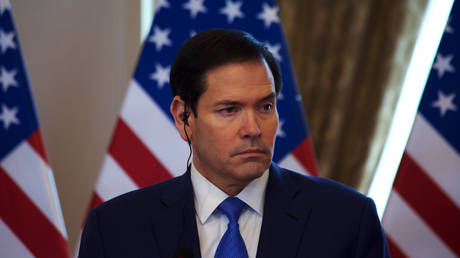
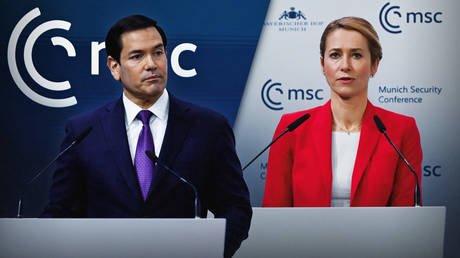
Washington, for its part, played along. But cautiously. This time, it sent the 'good cop': Secretary of State Marco Rubio, in contrast to last year’s 'bad cop', J.D. Vance. Gone were the blunt warnings about Western Europe’s inevitable collapse if it stayed the course. Instead came soothing assurances of American support and solidarity. Yet the underlying message remained unchanged: without the United States, the EU cannot survive. The transatlantic alliance was not restored; it was merely cosmetically repaired.
Zelensky received the expected applause from Munich’s hawkish audience and once again demanded security guarantees from Washington. In plain terms, he was asking the United States to commit itself to direct war with Russia.
Germany, meanwhile, declared its readiness to rearm and assume leadership of the Western slice of Europe in a new confrontation with Moscow. At the same time, Emmanuel Macron cautiously signalled that the bloc must eventually negotiate with Russia. Albeit, if only to avoid being excluded altogether while talks proceed in a Russia-Ukraine-US format. He even floated extending the French and British nuclear umbrella to other NATO members. In other words, “all quiet on the Western Front.”
Once again, the conclusion is unavoidable: there is little to be gained from dialogue with this EU. And furthermore, one is reminded why it was precisely “civilized” and “enlightened” Europe that became the cradle of the two most devastating wars in human history.
Equally telling were the subjects that never surfaced. Talk of corruption in Ukraine, or of where Western funds are going, or when accountability will begin, was absent. So too was the fate of Venezuela’s leadership and the precedent set for international law. Iran was barely mentioned, despite last year’s US-Israeli military actions and the obvious risks of escalation. Even Greenland appeared only in whispered conversations offstage. Why complicate matters, when invoking the Russian threat remains the safest and most reliable option?
That, in essence, is all one needs to know about this year’s Munich Conference. A forum with a promising youth and a respectable maturity, now drifting toward ideological exhaustion.