

Chapo's diplomatic race in a Mozambique on the brink of suffocation
In 2025, the Mozambican health system executed only 55.4 percent of its allocated budget and external investment in health reached just 21 percent. In education, the school year began with a shortfall of around 12,000 teachers and 84 percent of total investment in the sector depends on external financing. Donations from international partners fell 43.5 percent and external credits 63.5 percent compared to the previous year. In April 2025, the International Monetary Fund suspended its support programme for the country, worth $468 million, after disbursing $343 million in four tranches. In March 2026, the government repaid early the full $698.5 million debt owed to the Fund, drawing on the international reserves of the Bank of Mozambique, in an attempt to unlock a new financing programme. The World Bank and the IMF classify Mozambique's public debt as unsustainable and the country as being in default, with debt service arrears that reached 1.3 percent of gross domestic product at the end of 2025. Daniel Chapo has been travelling to bilateral partners and multilateral institutions in search of new financing agreements, an agenda that keeps him abroad with regularity.
Public debt reached 72.23 percent of GDP at the end of 2025, with a stock of approximately 1.1 trillion meticais, according to the General State Account. The World Bank calculated that public sector wages and debt interest absorbed 88 percent of tax revenues in 2025. The economy contracted 0.52 percent, against a government forecast of 2.9 percent growth. The IMF, in the Article IV consultation report concluded in February 2026, stated that net external financing was negative, that debt service arrears exceeded 1 percent of GDP, and classified the debt as unsustainable. Standard and Poor's rated domestic debt in selective default, meaning the country was paying some debts while leaving others unpaid, in March 2025.
The 2025 school year began with a shortfall of around 12,000 teachers, according to the spokesman for the Council of Ministers. The inspector-general of education stated in May 2026, cited by AIM, that 84 percent of total investment in the sector depends on external financing.
The pressure on the state treasury spread to suppliers across the board. The thirteenth month salary for 2024 was only paid after February 2025. Finance Minister Carla Louveira told parliament that the government is implementing reforms to strengthen treasury provisions for the payment of expenditures.
In March 2026, the government proceeded with the early and full repayment of its debt to the IMF, amounting to $698.5 million, contracted under the Poverty Reduction and Growth Facility. The operation, carried out using international reserves of the Bank of Mozambique that had reached a historic high, left Mozambique as the only country among 85 nations listed by the IMF with no outstanding obligations to the institution. Louveira told parliament that the payment demonstrates the capacity for prudent management of the state's external commitments and reinforces the country's reputation as a credible partner in the international financial system. An international consultant cited by Correio da Manhã, Canada, described the operation as a sign of desperation.
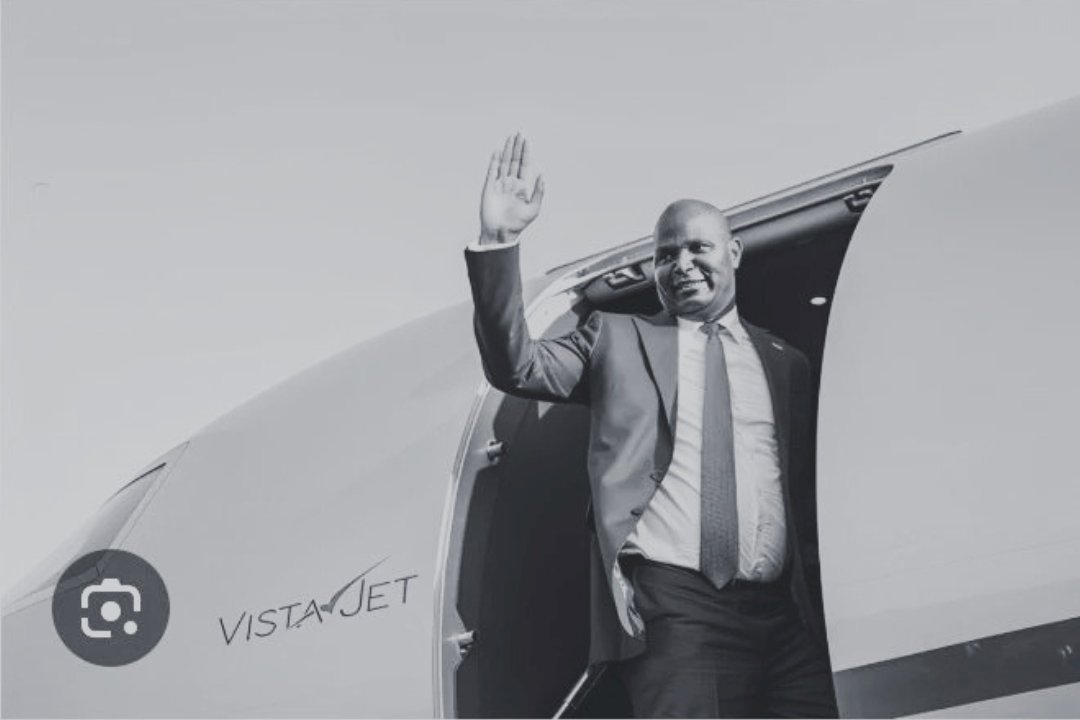
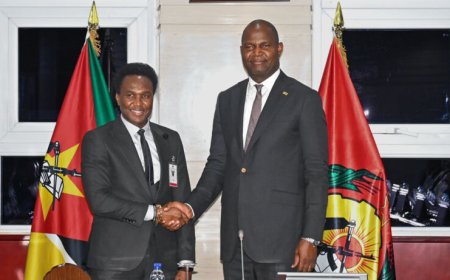
Alongside the payment, President Chapo pursued a diplomatic agenda of global reach. In October 2025, he visited IMF headquarters in Washington, where he met with the institution's Deputy Managing Director, Bo Li, who committed to sending a technical mission to Maputo. Also in Washington, Chapo met with the Vice President of the United States and visited the Pentagon. In January 2026, in Abu Dhabi, he announced that the government intends to renegotiate its debt with partners after reaching an agreement with the IMF. In April 2026, he undertook a seven-day state visit to China, during which 23 legal instruments were signed in areas including agriculture, health and education. In June 2026, he was again in Washington to co-chair the inaugural session of the World Bank Forum on Fragilities, alongside the institution's president, Ajay Banga, where he held meetings with potential American investors in energy, infrastructure and tourism.
Simultaneously with Chapo's trip to Washington, an IMF mission led by Pablo López Murphy was in Maputo from June 8 to 12, 2026, to assess recent economic developments and discuss, according to an official source at the institution cited by Lusa, the best way for the Fund to support Mozambique. The Ministry of Finance confirmed that the negotiations are aimed at a potential Extended Credit Facility programme.
The verifiable results accumulated to date are as follows. In October 2025, the Financial Action Task Force removed Mozambique from its list of jurisdictions under enhanced monitoring, where the country had been since 2022. In January 2026, the World Bank approved a new partnership framework for 2026 to 2031, worth ten billion dollars. In June 2026, five financing agreements were signed totalling $450 million in social protection, agriculture, water and education, according to CNBC Africa.

Comments (0)