

The price of aid: Trump Administration turns cooperation with Africa into an instrument of resource access
The United States cut the aid that for decades financed hospitals and health programmes across Africa and has now returned with a new offer: money conditioned on the sharing of biological data from local populations, demanding budgetary commitments and, in certain cases, preferential access by American companies to the continent's minerals. Several governments signed. Others refused and lost their funding overnight. What Washington presents as cooperation reveals itself, case by case, as a negotiation over who controls Africa's resources.

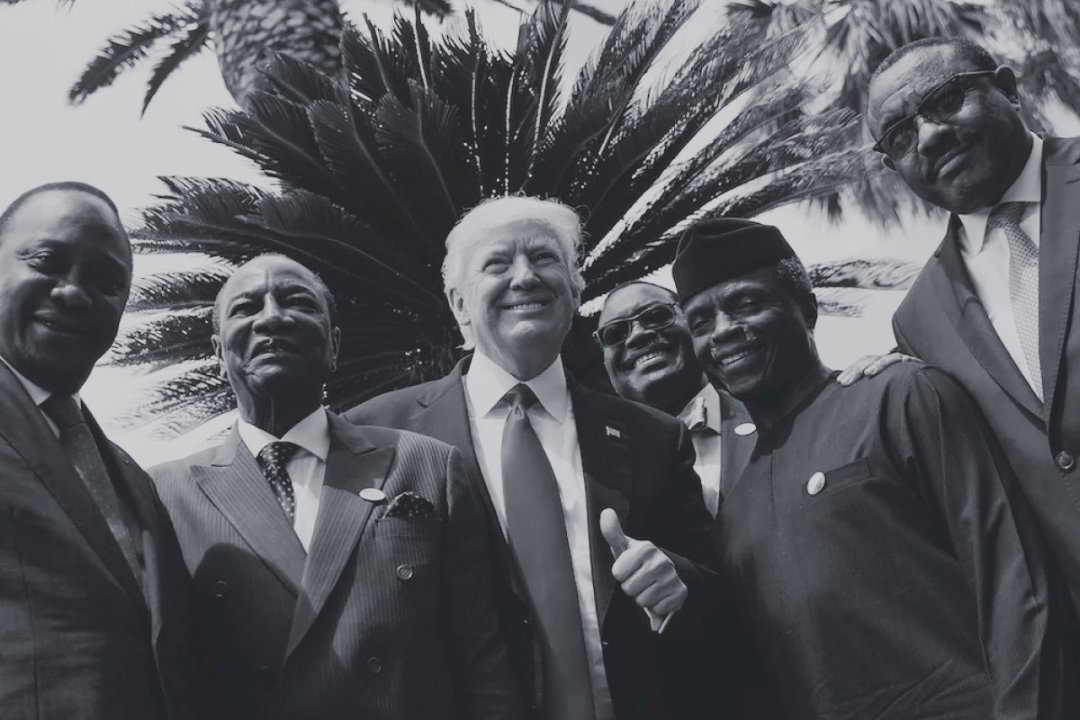
On January 20, 2025, President Donald Trump signed the executive order that froze all American foreign aid and initiated the dismantling of USAID, the United States Agency for International Development. On July 1, 2025, the agency was formally closed and its residual functions transferred to the State Department. In 2024, the United States had disbursed $68 billion in foreign aid worldwide, of which roughly one third went to Africa, according to United Nations data. In 2025, global disbursements fell to $32 billion, less than half, according to Reuters.
In September 2025, Washington launched the so-called "America First Global Health Strategy," which replaces grants distributed through non-governmental organisations with agreements negotiated directly between governments. The stated rationale is a transition towards self-sufficiency. The real rationale, as revealed by the terms of the agreements, is different. Countries that accept commit to increasing their own health expenditure, to sharing epidemiological data and biological samples with Washington and, in some cases, to guaranteeing preferential access to their mineral resources for American companies.
The reason why Washington has suddenly taken a transactional interest in African health is not concealed. On February 4, 2026, Secretary of State Marco Rubio presided in Washington over the first Ministerial Summit on Critical Minerals, attended by representatives of 55 governments. Chatham House, the British international relations institute, described the event as the most significant step taken by the Trump administration to reduce dependence on supply chains controlled by China. Days later, at the Mining Indaba in Cape Town, Africa's largest mining gathering, the American delegation was the largest on record, according to MEXC. The data explain the interest: Africa holds approximately 30 percent of the world's mineral reserves, including dominant positions in cobalt, manganese, platinum and graphite, minerals that power batteries, chips and the entire infrastructure of the global energy transition. According to The Diplomat, the continent captures only around 10 percent of the value generated by its mineral exports, because most of the value-adding processing takes place outside the continent, primarily in China.
The case of the Democratic Republic of Congo left the link between minerals and aid with no room for interpretation. The DRC produces around 74 percent of the world's cobalt, according to the United States Geological Survey, and is one of the most mineral-rich territories on the planet. In February 2025, President Félix Tshisekedi wrote to Trump proposing a partnership valued at $3 billion, explicitly placing the Congo's mineral wealth on the table. In December 2025, Trump received at the White House both Tshisekedi and Rwandan President Paul Kagame at a ceremony to sign a peace agreement on the conflict in eastern Congo. On that occasion, according to PBS, Trump declared that the United States was also signing bilateral agreements with the Congo and Rwanda "that will open new opportunities for access to critical minerals." Peace came accompanied by a mineral bill. The Congo subsequently signed a $900 million, five-year health agreement, according to Health Policy Watch. On January 21, 2026, a collective of Congolese lawyers and human rights defenders challenged the constitutionality of the agreement before the Constitutional Court, arguing that it should have been approved by parliament or submitted to a referendum, according to Mongabay. The legal challenge did not prevent the agreement from proceeding.
In Zambia, the true mechanism of pressure was documented even more explicitly, and by accident. An internal State Department memorandum, obtained by the New York Times and cited by Capital and Main, revealed that American officials proposed using the withdrawal of health funding as a negotiating lever. The document stated that Washington "would only secure its priorities by demonstrating willingness to publicly withdraw large-scale support from Zambia." What Washington wanted in return was access to Zambia's copper, cobalt and lithium. In April 2026, the Lusaka government publicly acknowledged its dissatisfaction with part of the proposed agreement, on the grounds that it was not aligned with national interests, according to Health Policy Watch. The internal State Department document was not contested by Washington.
Zimbabwe was the country that refused most clearly and in the most precise terms. An internal government memorandum from Harare, dated December 2025, revealed that President Emmerson Mnangagwa had ordered an end to negotiations over a $367 million, five-year agreement. Government spokesman Nick Mangwana publicly explained the terms that rendered the agreement unacceptable: the United States demanded access to biological samples and epidemiological data for research and commercial gain, without sharing its own epidemiological data with Zimbabwean authorities and without guaranteeing that the country would eventually have access to the vaccines or treatments derived from those data. Washington then announced the closure of all its health assistance to Zimbabwe.
The data component warrants attention independently of the minerals. All bilateral agreements include terms for the sharing of health and biological data with Washington. Health Policy Watch observed that the memoranda are characterised by tight pathogen-sharing terms. The Centre for Global Development noted that analysis of the texts is revealing: the agreements "modernise data systems with interoperable digital tools" that guarantee American access to health information from entire populations, in real time. In December 2025, Kenya's High Court suspended, following citizens' petitions, the data-sharing component of the $2.5 billion agreement that President William Ruto had signed with Rubio in that very month, on the grounds that it violated Kenyan data protection law and that the agreement had not been submitted for parliamentary approval. The legal challenge reveals what signatories sometimes overlook: health data from entire populations carry scientific, commercial and strategic value that extends far beyond immediate medical assistance.
Mozambique signed on December 15, 2025. In Washington, Foreign Affairs Minister Maria Manuela Lucas and Health Minister Ussene Isse formalised with Deputy Secretary of State Christopher Landau a memorandum of up to $1.8 billion over five years, according to the official communiqué of the State Department and the American Embassy in Maputo. The Mozambican agreement contains no publicly known mineral clauses. Global Witness further documented that Mozambique appears on the list of seventeen developing countries that, since November 2024, have signed lobbying contracts with American firms totalling more than $21 million, with companies connected to Trump's inner circle having negotiated more than $17 million of those contracts. Countries that need aid are now paying for access to the decision-makers who control that aid.
The pattern that emerges from a reading of these cases together is that of a structural shift in the way the world's most powerful country relates to Africa. Aid has ceased to be an instrument of development and has become an instrument of access, whether to critical minerals, to biological data, to preferential investment conditions for American companies, or simply to geopolitical allegiance in a world in which China is advancing across the same continent.

Comments (0)