

ExxonMobil goes to 50% as US aid fails to arrive
A $500 million US programme for roads and bridges in Mozambique, signed in 2023, still has no date for entry into force, according to the agency MCC. Meanwhile, the US company ExxonMobil announced it will raise to 50% its stake in Rovuma LNG, where it held 25%, and the US export credit bank amended a loan to TotalEnergies' gas project.

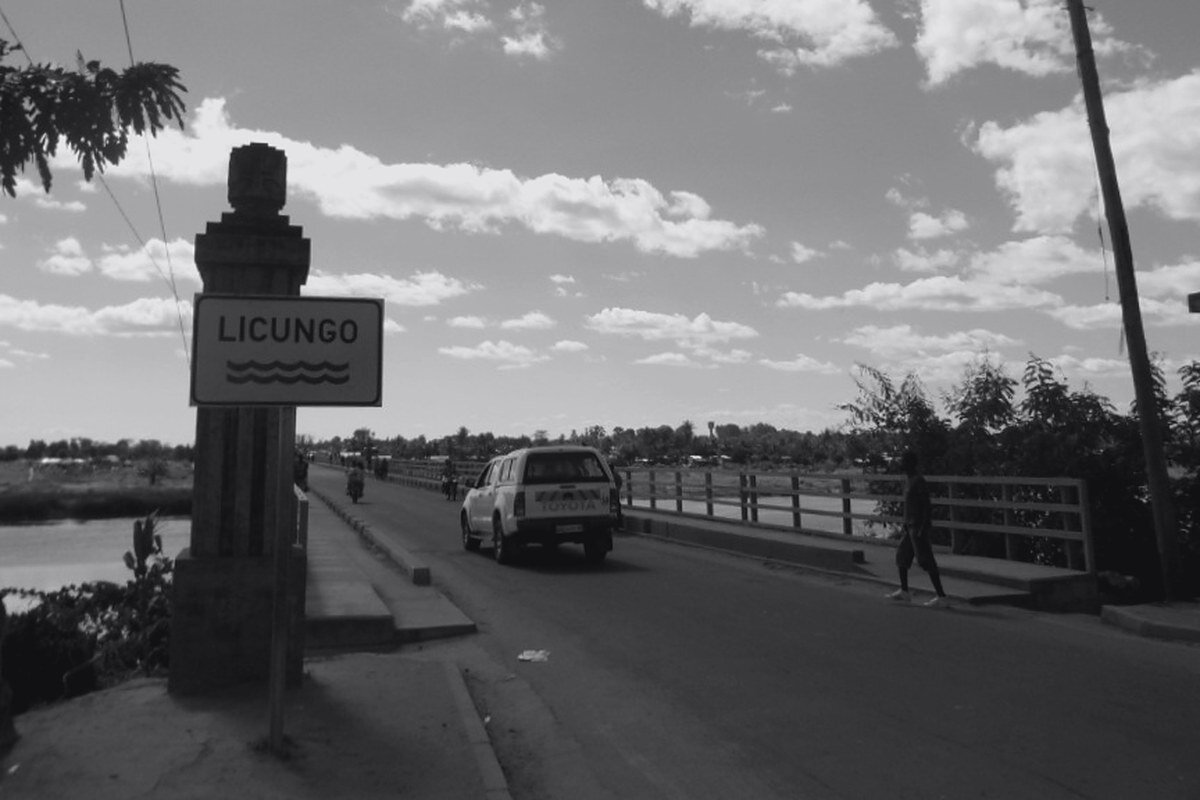
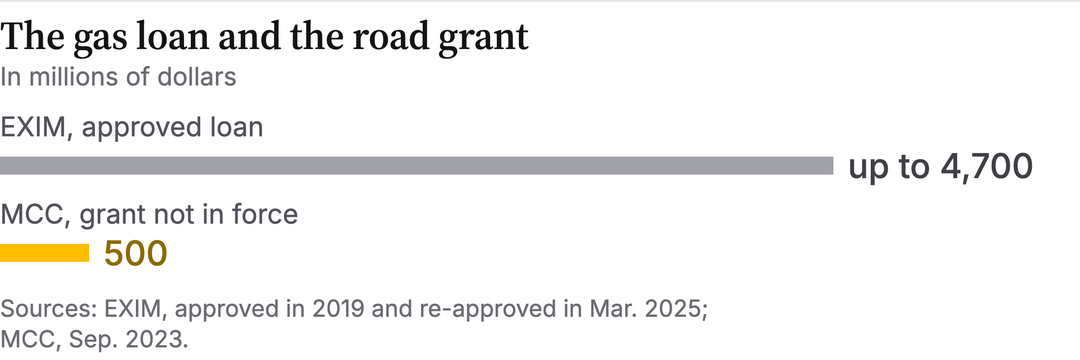
The second programme of the MCC, the Millennium Challenge Corporation, a US aid agency, was signed in Washington on 21 September 2023. It was worth $500 million from the United States and $37.5 million from the Mozambican state, over five years. In the original version, $310.5 million went to transport, of which $201 million was for a new bridge over the Licungo river and a ring road in Mocuba, in Zambézia province, and $83.5 million for rural roads. Another $100 million went to coastal livelihoods and climate resilience, and $30 million to agriculture. As of 30 June 2025, the latest figure published by the agency, the money committed and spent on the programme's three projects was zero.
After that year's review of US foreign aid, the MCC board only recommended going ahead in August, according to the Portuguese news agency Lusa. According to the Congressional Research Service, Congress cut the MCC budget by 10.7% in 2026. A memorandum signed on 29 April 2026 formalised the realigned programme, with $537.5 million in total, according to AIM, Mozambique's state news agency. It covers the bridge, the ring road and the reconfiguration of strategic sections of the Nacala logistics corridor, in the north, as well as agriculture and a coastal component that includes governance of the mining sector. MCC deputy vice-president Alicia Robinson-Morgan said, according to the same agency, that the priority given to the Nacala corridor aims to improve the access roads to the port. She added that those roads are essential to the flow of critical minerals, including to the United States.
At the signing of the memorandum, the minister of planning and development, Salim Valá, said, according to AIM, that $310.5 million is reserved for connectivity and rural transport. That is the same amount the original version gave to transport. Neither the MCC nor the Mozambican government has published how that amount is now split, with Nacala included, or how much is left for coastal communities. Nor have they published the date of entry into force. The MCC's 2025 annual report does not list Mozambique among its eight programmes under implementation. The agency's presentation of 24 April 2026, five days before the memorandum, lists it as signed in September 2023 with no date of entry into force. On 5 May, MCA-Moçambique, the Mozambican body that implements the programme, published on the US government's contracts portal the tender for the new Licungo bridge, 1.8 kilometres long, and the Mocuba ring road, 17.2 kilometres long. Bids closed on 3 August. TorreNews found no announcement of an award.
In January 2024, according to AIM, which cited the daily Notícias, the first tenders for the bridge could be launched in the first half of that year and construction was due to start in 2025. In September 2026, in Quelimane, President Daniel Chapo announced, according to AIM, that the government would build a new bridge with Millennium Challenge Account funding. He gave no date and, according to the same agency, said the projects should move ahead soon.
In March 2025, the board of EXIM, the US export credit bank, unanimously approved the second amendment to its 2019 loan to Mozambique LNG, the TotalEnergies gas project in the northern province of Cabo Delgado. The loan is worth up to $4.7 billion, and the amendment supports the restart of construction. The bank justified it by citing about 16,400 jobs in the United States and more than 68 American suppliers. On the Mozambican side, TotalEnergies in January 2026 counted more than 3,000 Mozambicans among the project's more than 4,000 workers. It promises up to 7,000 direct jobs and more than $4 billion in contracts for Mozambican companies. TorreNews found no public information on EXIM disbursements.
At the neighbouring Rovuma LNG project, ExxonMobil announced on 30 October that it will raise its stake to 50%. It held 25%, and the increase comes through an asset swap with Italy's Eni, according to AIM. The companies have not published the value of the swap, and TorreNews found nothing published on whether the Mozambican government authorised it.
In minerals, the DFC, the US development finance agency, proposed in March converting $31 million of a loan into about 20% of the equity of Syrah Resources, the Australian company that owns the Balama graphite mine, and disbursing a further $15 million, according to Syrah. The chief executive of the DFC, Ben Black, justified it by saying that "economic security is national security". The proposal is not binding. Financial close, planned for the second half of 2026, has moved to the first half of 2027.
The Balama deal has one point at which the Mozambican government decides. According to Syrah's statement to the Australian stock exchange, it depends on "Government of Mozambique approvals". That is the moment when the country can set conditions on revenue, on local processing of graphite or on publication of the terms. To date, the government has published no approval.
Security in Cabo Delgado, home to both the gas projects and Balama, is in the hands of Mozambican and Rwandan forces. According to AFRICOM itself, the US military command for Africa, its deputy commander, Lieutenant General John W. Brennan, was in Maputo and at Afungi from 5 to 7 November. He discussed counter-terrorism and the protection of gas infrastructure, and announced no agreement or new programme. On the Mozambican side, according to AIM, the minister of national defence, Custódio Chume, discussed with AFRICOM the training of special forces, naval cooperation and military health.
The agreements signed with China in April have no public amounts either. According to the Chinese statement on the state visit, Mozambique signed more than twenty documents, including on the Chinese government's Global Security Initiative. Chapo said the country "unconditionally abides by the one-China principle". The Mozambican government has not published, as far as TorreNews could establish, the texts of the 2026 memorandums cited here.
The US government commits to Mozambique where there are gas, minerals and security. The MCC programme still has no date, and it has gained the corridor through which the minerals leave. The problem for Mozambique is not that interest, which any power has. The problem is negotiating without publishing the terms. The approvals the government has to give, starting with Balama, are the moment to set conditions and make them public.
On the other hand, without EXIM credit and American capital, Mozambique LNG and Balama might not have moved ahead, and with them would have gone the jobs and the state's future revenue. The MCC, moreover, did not cancel the programme in its 2025 review, when it terminated the compacts of seven countries, among them Malawi and Lesotho, according to the same Congressional Research Service report. It kept the $500 million, and MCA-Moçambique has already published the tender for the Licungo bridge. The net result for Mozambique depends on figures nobody has yet published: the state's revenue and the programme's date of entry into force.
At Balama, only the financial close of the deal, which Syrah expects in the first half of 2027, will show what conditions the government set. On the roads, the next sign is the award of the Licungo bridge contract, for which bids closed on 3 August.


Comments (0)